

Written by Ever After Homes | Reviewed by Brian DosRamos, President and Third-Generation Builder | Updated September 2026
When homeowners compare custom builders in Ontario, they often focus on the bottom-line number. The contract structure behind that number matters just as much. A cost-plus agreement and a fixed-price agreement allocate uncertainty differently, and neither is automatically right for every custom home or major renovation.
The best fit depends on how complete the design is, how clearly the scope can be defined, the condition of the property, the level of customization, and how much flexibility or price certainty the homeowner wants.
Here is what each model means in practice and what to ask before you sign.
What Is a Fixed-Price Contract?

A fixed-price contract, also called a lump-sum or stipulated-price contract, sets an agreed price for a clearly defined scope of work. To price that scope responsibly, the drawings, engineering, specifications, allowances, and exclusions should be developed before construction begins.
Fixed price does not mean that the final amount can never change. Homeowner-requested changes, allowance adjustments, excluded work, and genuinely unforeseen site conditions may still be handled separately under the contract. The value of the model is that the included scope is clearly defined and priced at the outset.
Fixed-price contracts can offer:
- Greater certainty for the defined scope.
- A simpler number for financing and cash-flow planning.
- A formal process for pricing and approving changes.
- Less need for the homeowner to review every trade invoice.
The quality of a fixed price depends on the quality of the pre-construction work. If important selections or site risks are left vague, the apparent certainty may rely on low allowances, broad exclusions, or later change orders.
What Is a Cost-Plus Contract?
Under a cost-plus contract, the homeowner pays the actual cost of labour, materials, subcontractors, and other agreed project expenses, plus a pre-agreed builder fee or percentage. The contract should explain which costs are reimbursable, how the builder’s fee is calculated, how invoices are reported, and how approvals are handled.
Cost-plus contracts can offer:
- Visibility into actual trade and supplier costs.
- Flexibility when design details or selections are still evolving.
- A practical structure for complex work where unknowns cannot reasonably be priced upfront.
- The ability to make decisions as the project develops, subject to budget controls.
The trade-off is that the final cost is not fully known at the start. Strong estimating, realistic allowances, regular cost reporting, approval thresholds, and contingency planning are therefore essential.
Where Does the Financial Risk Sit?
The most accurate answer is: it depends on the contract and the cause of the cost change.
With fixed price, the builder generally carries pricing and productivity risk for the work that is clearly included in the agreed scope. The homeowner may still be responsible for approved changes, allowance overages, excluded items, or unforeseen conditions addressed by the contract.
With cost-plus, the homeowner pays actual agreed project costs as they occur, so more cost variability remains with the homeowner. The builder should still be accountable for clear budgets, timely reporting, proper authorization, and competent project management.
Before comparing models, compare the documents. A detailed cost-plus budget may give a homeowner more useful information than a fixed price with unclear allowances and exclusions. Likewise, a well-developed fixed-price proposal may provide greater certainty than a preliminary cost-plus estimate.
When Fixed Price May Be a Good Fit
- The drawings, engineering, specifications, and major selections are substantially complete.
- The site has been investigated and material risks can be reasonably addressed.
- The homeowner values greater certainty for the defined scope.
- The builder can obtain reliable trade pricing and clearly document inclusions and exclusions.
When Cost-Plus May Be a Good Fit
- The project is highly custom or the design is still evolving
- You’re comfortable tracking invoices and auditing costs throughout the build
- There’s genuine uncertainty about site conditions or scope that makes upfront pricing impractical
- You want full visibility into every line item as it happens
Why the Lowest Opening Number Can Be Misleading
A low opening number is not automatically a better price under either model. A cost-plus estimate can look low if quantities, allowances, or site costs are understated. A fixed price can look low if important items are excluded, allowances are unrealistic, or the proposal assumes that later decisions will be handled as extras.
When comparing proposals, ask every builder to identify:
- The exact scope included in the price or budget.
- Allowances and the quality level they are intended to cover.
- Exclusions, assumptions, and owner-supplied items.
- Contingency and how unused funds are treated.
- The process for changes, approvals, and unforeseen conditions.
- The builder’s fee, overhead, and any markups.
Our guide to reading a builder’s estimate explains the main cost categories in more detail.
Questions to Ask Before Signing
- Which pricing model are you recommending for this project, and why?
- How complete must the drawings and selections be before pricing?
- What is included, excluded, or carried as an allowance?
- How are changes documented and approved before work proceeds?
- How will site conditions and other genuine unknowns be handled?
- If the contract is cost-plus, which costs receive the builder’s fee and how often will we receive cost reports?
- If the contract is fixed-price, which events can change the contract amount?
- What contingency should we carry, and who controls it?
How Ever After Approaches Pricing
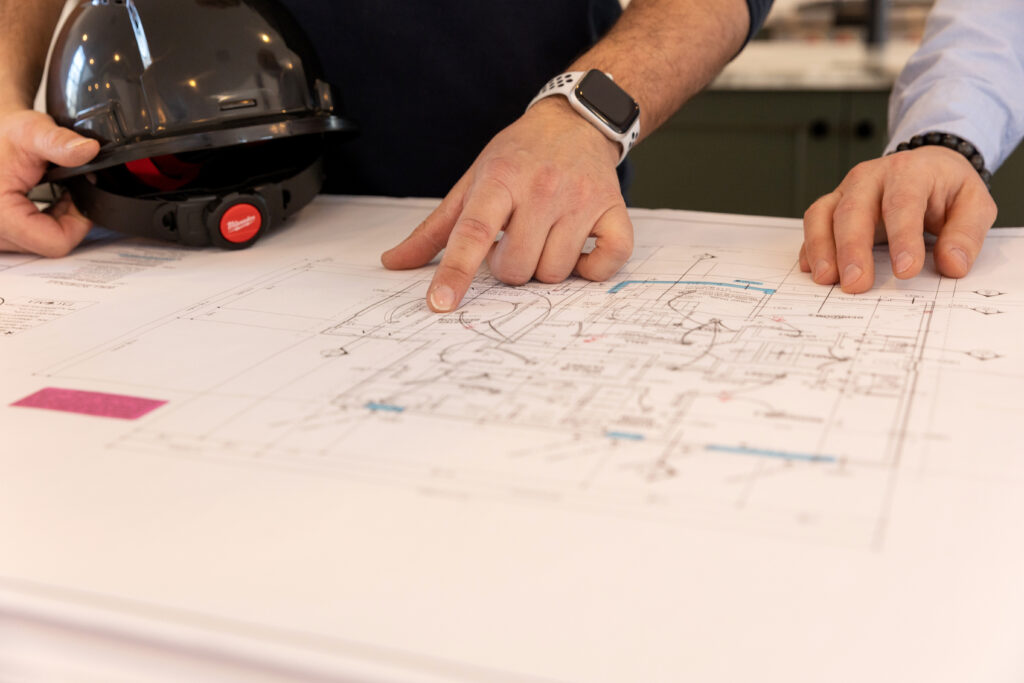
At Ever After Homes, we do not believe one pricing model is right for every project. Depending on the scope, level of design completion, site complexity, and project objectives, a custom home or major renovation may be structured as fixed-price or cost-plus.
Our priority is to create clarity before construction begins. That means developing the scope, coordinating design and engineering, confirming specifications, setting realistic allowances, identifying exclusions and site risks, and documenting how changes will be handled.
The goal is not simply to choose a label. It is to choose a contract structure that fits the project and gives the homeowner a clear understanding of how the budget will be managed.
To understand the broader budget categories, read The True Cost of Building a Custom Home in Southern Ontario or download our Custom Home Cost Guide.
Frequently Asked Questions
Is fixed-price always better than cost-plus?
No. Fixed price can work well when the scope is complete and the homeowner values certainty. Cost-plus can be appropriate for complex or evolving work where actual costs and flexibility are important. The quality of the scope, estimate, allowances, exclusions, and reporting matters as much as the model.
Does a fixed-price contract mean the price can never change?
No. The agreed price generally applies to the defined scope. Client-requested changes, allowance adjustments, excluded items, or genuinely unforeseen conditions may change the amount in accordance with the contract.
Can a cost-plus project still have budget controls?
Yes. A cost-plus project should still have a detailed working budget, realistic allowances, contingency, regular reporting, and clear approval rules. Transparency is most useful when it is paired with disciplined cost management.
Who carries the risk under each model?
Fixed price generally places more pricing risk for the included scope on the builder. Cost-plus leaves more cost variability with the homeowner. The exact allocation depends on the written contract, especially its exclusions, allowances, change provisions, and treatment of unforeseen conditions.
Does Ever After Homes offer both structures?
Depending on the project, Ever After may use a fixed-price or cost-plus structure. The recommended approach is based on scope certainty, design completion, site complexity, and the homeowner’s priorities.
If you are comparing builders and want to understand which contract structure fits your project, contact Ever After Homes. We can review your scope, explain the variables that affect pricing, and outline the next steps required to develop a reliable project budget.