You’ve found the perfect location in a neighbourhood that you love, with a lot that is recently available or an older home that would fit for a teardown. Whichever is your case, the main question is the same: can you actually build on this property?
That answer isn’t always obvious, and it’s best to find out before it becomes a costly mistake. Before you commit to a lot in Ontario, there are eight very important areas you’ll want to examine. Think of this as your due diligence framework, and this guide will help you not feel overwhelmed. Understanding your property before spending money is the kind of early planning that makes the rest of the process go smoothly.
If you’re earlier in the process and still deciding between renovating, adding on, or building new, it’s also worth reading about what to check when buying a teardown property to get the full picture.
1. Zoning and Permitted Use
The first question should not be ‘what do I want to build?’. First, you should ask yourself ‘what is this property allowed to be?’ Your municipality’s zoning by-law determines what types of structures are permitted, how large they can be, how close to property lines they can sit, and whether secondary dwellings or accessory structures are allowed.
Contact your local planning department and ask for the zoning designation for your specific parcel, the applicable by-law section, and any site-specific restrictions. Don’t rely on what a neighbour or someone you know did on a similar lot. It’s important to confirm your own.
Pro tip: Ask for the zoning by-law map AND the section specific to your lot. A one-page summary from a planning clerk can save you weeks of guesswork.
2. Conservation Authority and Environmental Constraints
In Southern Ontario, many properties fall within regulated areas governed by Conservation Authorities, and this might not be something you find out just from a listing description. If your lot is near a watercourse, wetland, floodplain, or valley, you may need Conservation Authority approval before you can build, affecting both what you build and where you place it.
Check whether your lot is subject to Conservation Authority jurisdiction, whether an Environmental Impact Study might be required, and whether there are protected trees or species on the property. Environmental approvals can meaningfully extend your pre-construction timeline, so it’s better to know before you sign.
3. Lot Grading and Topography
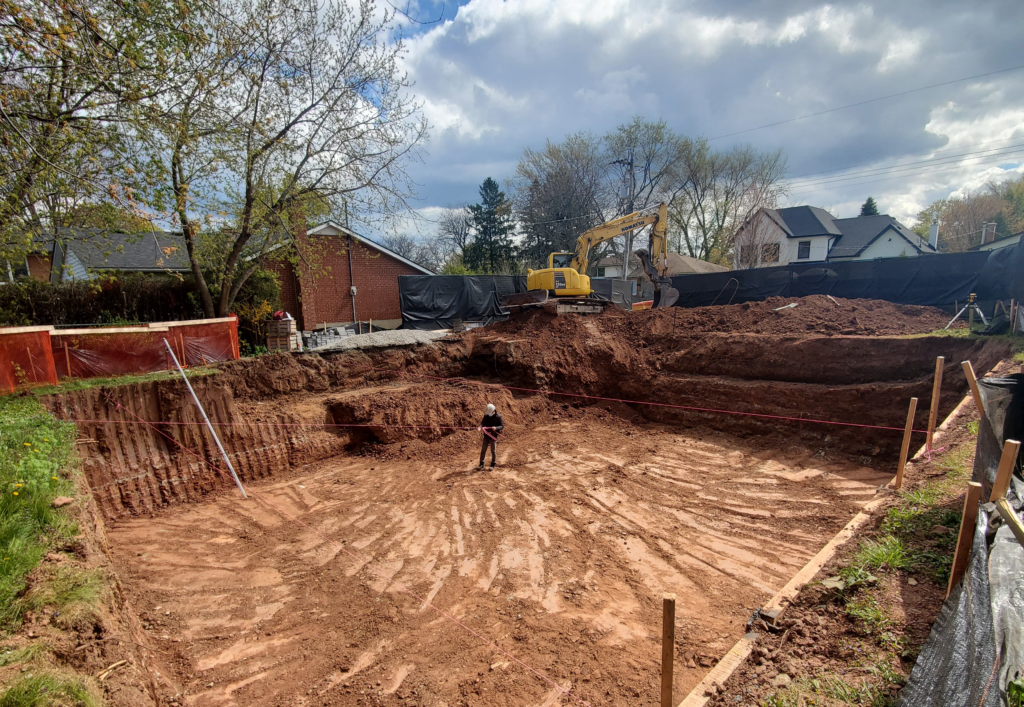
The physical space of a lot, its slopes, drainage patterns, and ground conditions will either make your build straightforward or expensive. Significant grade changes can dramatically affect foundation costs, require retaining walls, or limit your ability to do things such as a walkout basement.
Walk the lot after rain if you can and observe where water flows and where it pools. A flat, well-drained lot and a steeply sloped or low-lying lot can have the same price tag yet very different construction costs.
4. Services and Utilities
One of the most common cost surprises in Ontario land purchases can be servicing, which is the infrastructure needed to connect your home to water, sewer, hydro, and gas. For municipal lots, you’ll want to confirm whether water and sewer connections are available and how far away the hookup points are. For rural lots, the questions become more involved: septic feasibility, well viability, and water quality all need to be assessed before you commit to the lot.
Servicing costs can range from minimal to substantial, depending on your location and the state of existing infrastructure. This is one of the biggest variables in how site conditions affect your total budget, which is worth reviewing as you think through your numbers.
5. Access and Road Frontage
Ask yourself if construction vehicles, concrete trucks, and equipment can safely access your property. This matters more than people expect. You should confirm that your lot has legal road access, that driveway permits are obtainable, and that minimum frontage requirements are met. If there are shared driveway agreements, understand what that means for how you can build and what ongoing obligations come with it.
6. Easements and Title Restrictions
A parcel register (title search) will reveal whether your lot has any easements. These are rights held by utilities or other parties that run across or under your property. Easements can greatly shrink your buildable footprint, and building restrictions over easements are common. Subdivision covenants or architectural control guidelines can also limit what you’re allowed to build. These are things your lawyer should review, but you’ll want to understand them early in your planning.
7. Your Building Envelope
Once you’ve gathered zoning setbacks, easement locations, lot dimensions, and any environmental constraints, you can start to identify your actual building envelope (the area where your home can legally sit). On paper, a 60-foot-wide lot might sound generous. After accounting for side-yard setbacks, driveway width, and any easements, the buildable footprint could become smaller.
Before you fall in love with a floor plan, you should confirm that it actually fits within your lot, including the house, garage, driveway, and any outdoor features you’re planning. This step is best done with a designer or builder who can sketch the envelope against your ideas.
8. Municipal Approvals and Timeline
Some lots are more permit-ready than others. Straightforward lots in established neighbourhoods typically have a cleaner path to approvals. Lots that require variances, site plan approvals, or conservation authority permits can take longer. In Ontario, some lots require six to twelve months or more before you can break ground, and that lead time affects your budget, your living arrangements, and the overall planning of your timeline.
Ask the municipality about the permit process timeline and whether any minor variances or special approvals are likely to be required. The fees paid to the municipality when you build (developmental charges) should also be confirmed, as they vary considerably between communities in the Burlington, Oakville, and Hamilton area.
Red Flags That Deserve a Pause
As you work through this checklist, certain things should slow you down before you firm up a purchase:
- “Buyer to verify” clauses in the listing without independent confirmation
- No recent survey, and approximate or unclear lot boundaries
- Conservation overlays with no clarity on what’s permitted
- Septic feasibility is listed as unverified
- No recent soil or water data on rural lots
- Zoning compliance that hasn’t been confirmed for your intended use
These aren’t automatically deal-breakers. However, these are questions you want answered before you commit.
Before You Firm Your Purchase
The goal of all this isn’t to find reasons to walk away; rather, it’s to walk into this commitment with clear eyes. The best custom home projects in Southern Ontario start with a property that’s been properly assessed.
How Ever After Homes approaches early planning starts exactly here: understanding your property before committing to a direction. That’s how you avoid expensive surprises and make confident decisions.
Download the Ever After Lot-Readiness Checklist
We’ve put together a detailed, printable checklist that walks through each of these eight areas, formatted to take with you when you’re assessing a property. Download it to use on your own, or bring it to a site review conversation with our team.

Want a Professional Read on Your Property?
One of the most valuable things you can do before committing to a lot is to bring in someone who knows what to look for. Brian DosRamos, founder of Ever After Homes, will visit a property with you, assess the site conditions first-hand, and look up the relevant zoning and municipal requirements. This can definitely help you to have a clear picture of what you’re working with before you sign anything.
Brian has assessed properties across all of our areas of service, and can quickly identify important concerns: what the lot will support, what approvals are likely required, and what site conditions could affect your budget or timeline.
If you’re considering a property and want a professional opinion before you commit, book a call with us!
Not sure how your property stacks up? Download the Ever After Lot-Readiness Checklist, or book a lot assessment with Ever After to get a professional read on your property before you commit.
FAQ: Is Your Lot Build-Ready? A Checklist for Ontario Homeowners
How do I find out what my lot is zoned for in Ontario? Contact your local municipality’s planning department and ask for the zoning designation for your specific parcel. You can also search your municipality’s online zoning map, but always confirm directly with a planning clerk, since online tools aren’t always up to date and might not account for site-specific restrictions.
What happens if my lot is near a creek, ravine, or wetland? Your property may fall within a Conservation Authority-regulated area, which means you’ll need their approval before you can build. Depending on the proximity and severity, you may also be required to commission an Environmental Impact Study. While this doesn’t automatically mean you can’t build, it might add time and cost to your pre-construction process.
Can I build a custom home on a lot that already has a house on it? Yes, this is what we call a teardown-rebuild, and it’s increasingly common in established Southern Ontario neighbourhoods like Burlington, Oakville, and Hamilton. The existing home is demolished, and a new custom home is built in its place. The lot still meets zoning, servicing, and setback requirements, so the same checklist applies.
How much does it cost to service a lot in Ontario? Costs vary widely. A municipal lot in an established neighbourhood with water and sewer already at the property line may have minimal servicing costs. A rural lot that requires a well, septic system, and hydro extension can add a significant amount to your budget before construction begins. This is one of the most important variables to clarify early on.
What is a building envelope, and why does it matter? Your building envelope is the area on your lot where a structure can legally be placed, after accounting for zoning setbacks, easements, and any environmental constraints. It’s not the same as your lot size. A lot that looks spacious on paper can have a small buildable footprint once all the restrictions are mapped out. Knowing your envelope early on in the process can prevent you from falling in love with a floor plan that won’t fit your lot.
Do I need a survey before buying a lot to build on? You should treat the absence of a recent survey as a red flag. A current survey confirms lot boundaries, identifies encroachments, and is required by your lawyer to complete a title search properly. Without one, you’re relying on approximate or assumed boundaries, and this can create serious problems once you start designing and permitting.